Blues Malone: Elevating Designs with Handwritten Elegance
In the world of digital design, finding a typeface that feels both personal and professional is a common challenge. We often seek a font that carries the warmth of a human touch without sacrificing clarity or versatility. Blues Malone steps into this space as a modern handwritten font, meticulously crafted to blend authentic calligraphic flow with a clean, contemporary aesthetic. It’s not just another script font; it’s a design asset built to add a layer of sophistication to any project it graces.
The Anatomy of a Versatile Creative Font
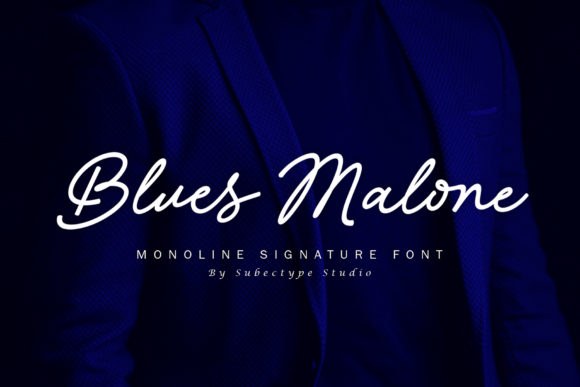
At its core, Blues Malone is defined by its balanced letterforms and subtle elegance. Unlike overly casual or chaotic handwritten fonts, it maintains a consistent rhythm and legibility. The strokes vary naturally, mimicking the pressure and release of a real pen, which gives it an organic, authentic character. This careful construction means it avoids the pitfalls of many display fonts—it remains readable at smaller sizes while still making a strong visual statement when scaled up.
The personality of Blues Malone is one of confident grace. It doesn’t scream for attention but rather invites the viewer in with its refined curves and thoughtful spacing. This makes it an incredibly flexible typeface. It can convey intimacy and approachability in a wedding invitation, yet project the same level of trust and creativity in a startup’s brand identity. Its appeal lies in this duality: it’s personal enough to feel handcrafted, yet polished enough for commercial use.
Practical Applications: Where Blues Malone Shines
The true test of any premium font is its real-world performance. Blues Malone excels in scenarios where you need to inject personality without compromising on professionalism. For entrepreneurs and small business owners, it’s a powerful tool for logo design. A logo set in Blues Malone instantly communicates creativity, care, and a human-centric approach, which is invaluable for brands in the lifestyle, beauty, artisan, or consulting spaces.
In editorial design and publishing, this handwritten font adds a compelling visual hierarchy. Use it for pull quotes, chapter titles, or subheadings in a magazine layout or blog post to break the monotony of body text in a serif or sans serif font. For content creators and marketers, it’s a standout choice for social media graphics. A motivational quote, a sale announcement, or a story highlight cover set in Blues Malone feels more engaging and shareable than text in a standard system font.
Packaging design is another arena where this typeface thrives. Imagine a skincare label, a coffee bag, or a gourmet food product—the elegant script of Blues Malone can elevate the perceived value, suggesting quality and artisanal craftsmanship. For web design, it can be used sparingly but effectively for hero text or key calls-to-action, guiding the user’s eye with its distinctive style while relying on a more neutral font for longer paragraphs to ensure readability.
Integrating Blues Malone into Your Design Workflow
Choosing the right font is only half the battle; using it effectively is what creates impact. When evaluating Blues Malone for a project, consider the overall tone. It pairs beautifully with clean, minimalist sans serif fonts for a modern contrast, or with a classic serif for a more traditional, layered feel. Test combinations like Blues Malone with a font like Lato or Open Sans for digital projects, or with a Garamond or Baskerville for print materials.
Before committing, always test the font in context. Mock up your logo, create a sample social media post, or lay out a paragraph to see how it interacts with your other design assets and content. Pay close attention to readability at the intended size, especially for digital applications where screen rendering can vary. Most quality fonts, including Blues Malone, will come with multiple styles or weights—explore these to add further nuance to your designs, such as using a lighter weight for subtler accents.
Finally, understanding the licensing is crucial for any commercial font. Always review the license that accompanies Blues Malone or any typeface you purchase. A standard license typically covers most small business and personal projects, but if you’re designing for a large corporation, embedding the font in an app, or using it in a widely distributed product, you may need an expanded license. This due diligence protects you and respects the work of the type designer.
In a landscape saturated with generic typography, Blues Malone offers a thoughtful solution. It bridges the gap between the impersonal and the overly whimsical, providing a tool that enhances brand perception, supports visual storytelling, and connects with audiences on a more human level. By understanding its strengths and applying it with intention, you can leverage this creative font to bring a distinctive and professional elegance to your next project.