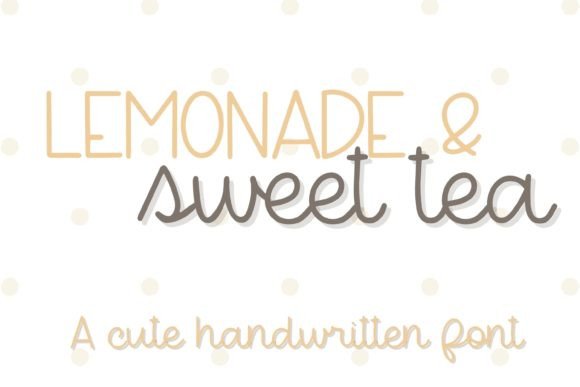
Refreshing Your Brand with Lemonade & Sweet Tea
When you are building a brand, whether it is for a bustling coffee shop or a digital marketing agency, the typography you choose acts as the silent ambassador of your message. You might spend hours deliberating between a geometric sans serif font for your headers and a classic serif font for your body text, but sometimes, the project calls for something with more soul. It needs a human touch that standard typefaces often strip away. This is where Lemonade & Sweet Tea enters the conversation. It is not just a collection of letters; it is a design asset that brings a specific flavor to your visual hierarchy.
Imagine a font that feels like a warm afternoon on a porch swing. Lemonade & Sweet Tea is a premium font that captures the essence of sweetness and kindness within its strokes. It is a script font that balances elegance with a relaxed, handwritten font aesthetic. Unlike rigid corporate typefaces, this font allows your designs to breathe. It offers a distinct personality that can soften hard edges in a layout or add a layer of approachability to a professional service. For designers and entrepreneurs alike, understanding how to wield this creative font effectively can transform a generic project into something memorable.
The Visual Appeal: More Than Just Curves
At its core, Lemonade & Sweet Tea is a display font designed to catch the eye. It features flowing swashes and smooth connections that mimic natural handwriting without sacrificing legibility. In modern typography, we often see a split between highly stylized scripts that are impossible to read and standard block letters that lack charm. This typeface sits in the sweet spot. It feels organic and personal, making it an excellent choice for projects where you want to establish an immediate emotional connection with the viewer.
The visual characteristics of this script font lend themselves well to a variety of aesthetics. If you are working on a vintage-inspired logo design, the curves of the letters can evoke a sense of nostalgia. Conversely, if you pair it with a clean sans serif font for a contemporary look, it adds a necessary contrast that keeps the design from feeling sterile. It is a versatile design asset that works across different mediums, provided you understand its strengths.
Practical Applications for Business and Creativity
One of the most common questions I hear from clients and junior designers is about application. "Where do I actually use a font like this?" The answer lies in the medium and the message.
For packaging design, particularly in the food, beauty, or lifestyle sectors, Lemonade & Sweet Tea is a powerhouse. Imagine a label for artisanal jam or a hand-poured candle. Using this font for the product name instantly communicates that the item is handmade, high-quality, and crafted with care. It bypasses the need for long descriptions; the typography does the storytelling for you.
In the realm of brand identity, consistency is key. However, consistency does not mean monotony. A brand might use a standard serif font for long-form blog posts to ensure readability, but use Lemonade & Sweet Tea for social media graphics and pull quotes. This creates a visual rhythm. Your audience learns to associate that specific script style with your brand’s voice—friendly, approachable, and genuine.
Here are a few specific scenarios where this typeface shines:
- Merchandise and Apparel: It is perfect for t-shirt designs, tote bags, and mugs. The handwritten style looks great on physical products because it feels less like a corporate logo and more like a personal statement.
- Editorial Design: Use it for chapter titles or magazine headers to break up the monotony of standard text blocks. It adds a touch of elegance to lifestyle publications.
- Wedding Stationery: The "sweetness" inherent in the font makes it a natural fit for invitations, save-the-dates, and thank you cards.
- Digital Presence: While you wouldn't use it for your main website body copy (readability is key for long-form reading), it works beautifully for hero images, email newsletter headers, and Pinterest graphics.
Technical Flexibility: The PUA Encoding Advantage
A significant hurdle with many decorative typefaces is accessibility. You find the perfect font, you love the preview image, but once you install it, you realize the fancy swashes and alternates are locked away, requiring advanced design software to access them. Lemonade & Sweet Tea solves this problem through PUA (Private Use Areas) encoding.
This technical feature is a massive benefit for small business owners and hobbyists who might not be experts in Adobe Illustrator or Photoshop. Because it is PUA encoded, you can access all the glyphs and swashes freely. This means you can easily copy and paste special characters into standard text editors or simple design tools like Canva. It democratizes the design process, allowing you to create professional-looking logo design variations or unique monograms without a steep learning curve.
When evaluating this font for your project, take the time to explore the glyph map. You will often find that the "standard" version of a letter is just the starting point. The alternates can change the entire flow of a word, allowing you to customize the look to fit the specific space you are filling.
Strategic Font Pairing
No font is an island. While Lemonade & Sweet Tea is a strong creative font, it rarely works best in isolation. The art of font pairing is about contrast and harmony. Because this typeface has a lot of movement and personality, it requires a partner that is more subdued and structured.
A classic pairing strategy is to combine this script font with a geometric sans serif font. The clean lines of the sans serif provide a stable foundation, allowing the fluidity of the script to stand out without causing visual chaos. Alternatively, pairing it with a sturdy serif font can create a sophisticated, editorial look that feels grounded and authoritative.
Avoid pairing it with other handwritten fonts or overly decorative display fonts. Doing so usually results in a cluttered design where the viewer doesn't know where to look. The goal of modern typography is clarity; use Lemonade & Sweet Tea as the accent, not the entire meal.
Readability and Licensing Considerations
As with any premium font, you must consider the context of use. While Lemonade & Sweet Tea is designed for legibility compared to many other scripts, it is still a display typeface. It is intended for headlines, logos, and short bursts of text. If you try to write a full paragraph in this font, you will fatigue your reader. Always prioritize your audience's reading experience. Use it to draw them in, then switch to a highly legible body font to deliver the information.
Furthermore, since this is a commercial font, you need to ensure you have the correct license for your specific usage. Are you using it for personal projects, like a birthday card for a friend? Or are you using it for a client’s logo that will be printed on thousands of products? Always review the licensing terms provided by the creator. Respecting font licensing is not just about legality; it is about supporting the artists who create these design assets that elevate our work.
In summary, Lemonade & Sweet Tea