Timeless Clarity: The Digital Clock Font Advantage
A Typeface Built for Instant Recognition
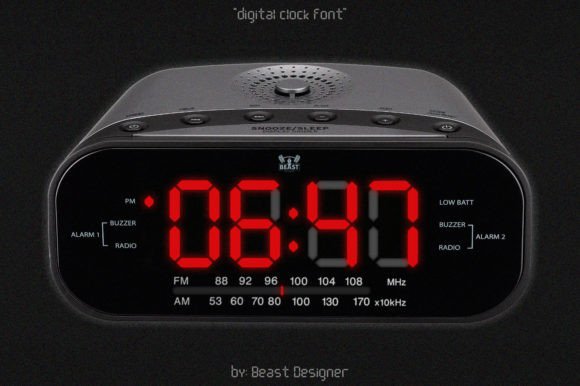
There's a reason we trust digital displays when timing matters most. Whether it's an alarm clock, a microwave, or a dashboard instrument, the Digital Clock font family captures that same immediacy. This isn't a typeface trying to win awards for artistic expression—it solves a specific problem with elegant efficiency. The numerals are open, evenly spaced, and stripped of unnecessary detail. Each character earns its place on the screen or page, and nothing distracts from the core message: the time, the number, the data point that demands attention right now.
Visually, Digital Clock sits in that sweet spot between retro charm and contemporary minimalism. The letterforms echo the segmented displays we grew up with, but the proportions feel refined rather than nostalgic. You won't find overly rounded terminals or exaggerated stroke contrasts here. Instead, the design favors geometric consistency and balanced negative space. It reads cleanly at small sizes, holds its own when scaled up for headlines, and maintains legibility across both light and dark backgrounds. For anyone working in modern typography, that kind of versatility is worth more than any decorative flourish.
Where This Font Earns Its Keep
Think about the projects where clarity isn't optional. Dashboard interfaces, fitness app counters, countdown timers for marketing campaigns, scoreboard graphics for sports content—these are environments where a viewer needs to absorb numerical information in under a second. A display font like Digital Clock handles that pressure naturally. Its structure eliminates ambiguity between similar characters, which matters enormously when you're displaying prices, statistics, or time-sensitive offers.
But the font's usefulness extends well beyond functional interfaces. I've seen Digital Clock used effectively in logo design for tech startups, music production brands, and even boutique watch companies. It signals precision and modernity without feeling cold. In packaging design, it works beautifully for products that want to convey speed, efficiency, or a futuristic edge—think energy drinks, productivity tools, or smart home devices. The character set typically includes colons, slashes, and common punctuation marks, making it practical for real-world applications rather than just decorative headlines.
For social media graphics, the font punches above its weight. Instagram stories featuring countdown timers, YouTube thumbnails highlighting view counts, and TikTok overlays showing timestamps all benefit from that instant readability. Web design projects—particularly those in the SaaS, fintech, or health tech space—can use Digital Clock as a creative font accent for data visualizations, progress indicators, or call-to-action elements. The font doesn't try to replace your body copy typeface; it carves out a specific role and executes it well.
Shaping Brand Perception Through Functional Design
Typography shapes how people feel about a brand before they read a single word. When Digital Clock appears in your brand identity system, it communicates something specific: you value precision, you respect your audience's time, and you operate with a certain technological confidence. That perception matters for entrepreneurs building SaaS products, marketers crafting urgency-driven campaigns, and publishers designing data-heavy editorial layouts.
The font also strengthens visual hierarchy when paired thoughtfully. Imagine a magazine spread where the body text uses a clean serif font or sans serif font, but the pull quotes and statistics appear in Digital Clock. The contrast draws the eye exactly where it needs to go. In editorial design, that kind of typographic tension keeps readers engaged without overwhelming them. The same principle applies to pitch decks, annual reports, and infographic templates—anywhere you need numbers to stand apart from the surrounding narrative.
Brand consistency is another practical benefit. Once you establish Digital Clock as part of your visual toolkit, it becomes a recognizable signature across touchpoints. Your email headers, presentation templates, product packaging, and website hero sections all share a cohesive thread. Over time, that consistency builds brand recognition and professionalism—two qualities that directly influence audience trust and engagement.
Practical Guidance for Choosing and Using Digital Clock
Before committing to any premium font, test it against your actual project requirements. Pull up a mockup of your design and drop Digital Clock into the relevant sections. Does it hold up at the sizes you'll actually use? Does it clash with your existing font pairing choices, or does it complement them? Pay close attention to how the numerals interact with surrounding text—a font that looks striking in isolation can feel jarring next to a mismatched companion.
Review the full character set and available styles before purchasing. Some versions of Digital Clock include multiple weights, alternate numeral styles, or extended language support. Those details matter if you're working on international projects or need flexibility across different media. Check whether the licensing covers your intended use—commercial font licenses vary significantly between desktop, web, app, and embedding applications. A font that works perfectly for your social media graphics might require a separate license for your mobile application.
Finally, consider the broader context of your design assets library. Digital Clock won't replace your primary sans serif font or script font, nor should it. Think of it as a specialized tool—like a handwritten font for personal touches or a bold display font for event posters. When you match the right typeface to the right task, your designs communicate more effectively, and your audience responds accordingly. That's the real value of thoughtful typography: not decoration, but clarity delivered with intention.