Stoner Sport: A Retro Display Font with Modern Racing Attitude
There's something undeniably magnetic about a typeface that carries a story in its letterforms. Stoner Sport isn't just another display font sitting in your collection—it's a direct nod to the gritty, analog charm of vintage typewriting, reimagined for projects that demand speed, personality, and a touch of nostalgia. If you've been searching for a typeface that bridges the gap between retro aesthetics and contemporary design needs, this one deserves a closer look.
What Makes Stoner Sport Stand Out
At its core, Stoner Sport draws inspiration from the mechanical precision and imperfect beauty of old-school typewriters. Each character carries subtle irregularities—slightly uneven baselines, ink-like texture variations, and letter spacing that feels hand-crafted rather than machine-stamped. These details give the font a human quality that polished, geometric typefaces often lack.
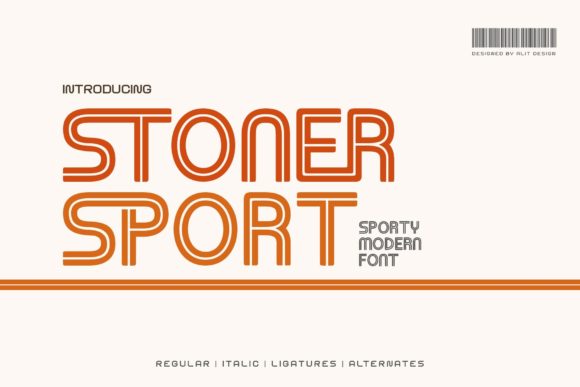
The visual personality of Stoner Sport leans heavily into motion and energy. Its letterforms have a forward-leaning dynamism, almost as if the text itself is racing across the page. This makes it particularly effective for projects where you want to communicate urgency, excitement, or athletic performance. The font doesn't whisper—it announces. Yet because of its typewriter roots, it maintains a grounded, approachable feel that prevents it from coming across as aggressive or overbearing.
What separates a good display font from a forgettable one is versatility within its niche. Stoner Sport manages to feel distinctly retro without being trapped in a specific decade. It references the 1970s and 1980s motorsport culture, but its clean enough edges and balanced proportions let it work comfortably alongside modern design assets and contemporary visual languages.
Where Stoner Sport Shines Brightest
Understanding where a typeface performs best saves you hours of trial and error. Stoner Sport thrives in contexts where bold, attention-grabbing text is the goal rather than extended reading. Here's where I've seen it—and fonts like it—deliver the strongest results.
Logo design and brand identity projects benefit enormously from a distinctive display font. If you're building a brand for an automotive shop, a racing team, a motorsport blog, or even a retro-themed café, Stoner Sport gives your wordmark instant character. It tells your audience something about your brand before they read a single word of your copy. Pair it with a clean sans serif font for body text, and you've got a font pairing that feels both intentional and visually balanced.
Car stickers and vehicle graphics are a natural home for this typeface. The font's dynamic letterforms translate beautifully to vinyl applications where readability at a glance matters. Whether it's a racing number, a team name, or a promotional decal, Stoner Sport holds its visual weight on curved surfaces and at varying distances.
Racing event titles and promotional materials—posters, banners, social media headers, and event programs—gain immediate energy from this font. Think about local track days, charity car shows, or motorsport podcast branding. The typeface sets the tone before any supporting copy does the explanatory work.
Beyond the obvious automotive applications, Stoner Sport works surprisingly well for packaging design with a vintage or artisan angle. Craft beer labels, specialty hot sauce bottles, and retro snack branding can all leverage its nostalgic warmth. The typewriter aesthetic suggests authenticity and craftsmanship—qualities that resonate with consumers who value handmade or small-batch products.
Social media graphics represent another strong use case. In a feed dominated by sleek, minimalist typography, a retro display font like Stoner Sport cuts through the visual noise. It performs particularly well for quote graphics, announcement posts, and promotional content where a single line of text needs to stop the scroll.
Practical Guidance for Working with This Typeface
Choosing the right creative font for a project involves more than gut instinct. Here are some practical considerations when evaluating whether Stoner Sport fits your next design.
Test readability at your intended size. Display fonts are designed for headlines, subheadings, and short bursts of text—not paragraphs. Set your text at the size you plan to use it and view it from the distance your audience will experience. A car sticker needs to read at ten feet; a website hero section needs to read on a phone screen. Stoner Sport performs well at medium to large sizes, but like most display typefaces, it loses clarity below roughly 16 pixels or 12 points.
Evaluate font pairings early. A strong display font needs a supporting cast. Stoner Sport pairs well with neutral sans serif fonts like Helvetica, Inter, or Open Sans for digital projects. For print work with a more editorial feel, consider pairing it with a readable serif font like Georgia or Lora. Avoid pairing it with other expressive typefaces—script fonts, handwritten fonts, or competing display faces will create visual clutter rather than hierarchy.
Review what's included in the font package. Before committing to any premium font, check whether it includes multiple weights, stylistic alternates, or extended character sets. These extras can significantly expand your creative options and improve the long-term value of your investment. A font with only uppercase letters, for instance, limits your flexibility for certain applications.
Understand the licensing terms. If you're using Stoner Sport for commercial work—client logos, merchandise, published materials—confirm that the license covers your intended use. Most commercial font licenses distinguish between desktop use, web use, and embedding in products. Reading the fine print upfront prevents legal headaches later.
How the Right Display Font Shapes Brand Perception
Typography is one of the most powerful tools in a designer's toolkit, yet it's often undervalued by people outside the creative field. The typeface you choose for a project communicates mood, era, credibility, and intention—sometimes before color or imagery even register.
A font like Stoner Sport influences brand identity in specific ways. Its retro character suggests heritage and authenticity. Its typewriter imperfections signal honesty and craftsmanship. Its dynamic posture conveys energy and forward momentum. These associations aren't accidental—they're built into the letterforms themselves, and they shape how audiences perceive the brands that use them.
Visual hierarchy is another area where a distinctive display typeface proves its worth. When your headline text looks fundamentally different from your body copy, readers instinctively understand the structure of your content. Stoner Sport creates that separation naturally, guiding the eye from headline to supporting text without requiring excessive size differences or color changes.
Consistency across touchpoints matters more than most people realize. When you use the same typeface across your website, social media, printed materials, and merchandise, you create a cohesive visual language that builds recognition over time. Stoner Sport works across these contexts because it's bold enough to register in digital environments while maintaining its character in print.
Finding the Right Fit for Your Creative Projects
Not every font suits every project, and that's by design. Stoner Sport is a display font with a strong personality, which means it works brilliantly in some contexts and poorly in others. Body copy for a legal document? Wrong fit. Headlines for a motorsport magazine? Perfect match.
The best approach is to start with your project's goals and audience. If you're designing for people who appreciate vintage aesthetics, speed culture, or handcrafted authenticity, this typeface aligns naturally with those values. If your project demands clinical precision or corporate neutrality, a different tool will serve you better.
Every typeface in your design library should earn its place. Stoner Sport earns its spot by filling a specific role that few other fonts can match—bridging retro typewriter warmth with the kinetic energy of motorsport culture. When you reach for it, reach with intention, and it will reward you with designs that genuinely capture attention.