Simple Note: A Handwriting Font That Actually Looks Handwritten
There's a particular kind of frustration that comes with searching for a handwriting font. You want something that feels authentic—like someone actually sat down with a pen and wrote it—but most options end up looking either too polished, too childish, or too illegible to use in any practical context. Simple Note solves that problem in a way that feels almost effortless, which is probably why the name fits so well.
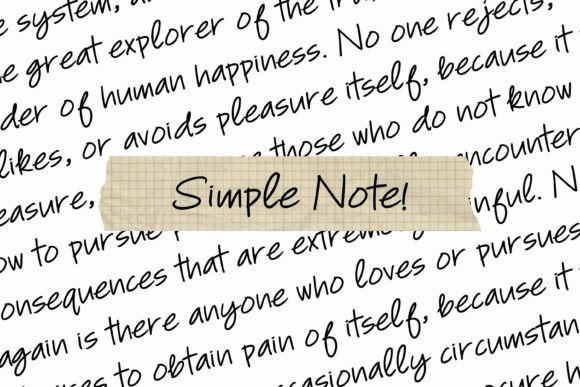
At its core, Simple Note is a casual handwriting font built around natural stroke variation. The letterforms carry the kind of organic inconsistency you'd expect from real handwriting—slight weight changes, gentle baseline shifts, and strokes that taper the way ink actually behaves on paper. It doesn't try to mimic calligraphy or formal penmanship. Instead, it captures the relaxed, slightly imperfect quality of someone jotting down thoughts quickly, which gives it an approachable, human warmth that more rigid typefaces simply can't replicate.
What Makes Simple Note Feel So Natural
The visual personality of Simple Note sits in a sweet spot that many handwritten fonts miss. It's casual without being sloppy. It's personal without being illegible. The letter spacing breathes comfortably, and the x-height is generous enough that lowercase characters don't disappear at smaller sizes. If you've ever tested a script font that looked gorgeous at 72 points but fell apart at 14, you'll appreciate the practical design thinking behind Simple Note.
The strokes have a slightly dry, pen-on-paper texture that avoids the overly smooth, vector-perfect look plaguing many digital handwriting fonts. This subtle roughness adds credibility. When Simple Note appears on a product label, a social media post, or a website header, it reads as something a person actually created rather than something a computer generated. That distinction matters more than most people realize, especially in contexts where authenticity drives engagement.
Another quality worth noting is its versatility across weights and styles. A good premium font offers range, and Simple Note delivers enough variation to handle different design needs without requiring you to hunt for a companion typeface every time the context shifts.
Where Simple Note Works Best
Think about the projects where a human touch makes the biggest difference. Product descriptions for handmade goods. Blog headers that need personality without sacrificing clarity. Instagram graphics where you're competing against hundreds of posts for attention. Packaging design for artisan brands. Wedding invitations. Newsletter headers. The list extends further than you might initially consider.
In logo design, Simple Note works particularly well for brands that want to signal warmth, creativity, or a personal connection with their audience. Coffee roasters, independent bookshops, wellness brands, boutique bakeries—these are the kinds of businesses where a handwritten typeface reinforces the brand identity rather than undermining it. The key is matching the font's personality to the brand's voice. Simple Note says, "We're approachable and genuine," which is exactly the message certain businesses need to communicate.
For editorial design and publishing, the font shines in pull quotes, chapter headings, and sidebar callouts. It creates visual hierarchy by contrasting against more structured serif or sans serif body text. A magazine spread using Simple Note for annotations or handwritten-style notes alongside clean editorial typography gains an immediate sense of intimacy and editorial craft.
Packaging design represents another natural fit. When you're designing labels, tags, or boxes for products that emphasize handmade quality or small-batch production, a creative font like Simple Note reinforces that narrative visually. It tells the customer something about the product before they even read the words.
Digital applications deserve equal attention. On websites, Simple Note works beautifully for hero section headlines, testimonial quotes, and call-to-action elements that need to feel conversational rather than corporate. In social media graphics, it cuts through the noise of generic templates. A well-chosen handwritten font applied to an Instagram story or a Pinterest pin immediately signals that a real person—rather than an algorithm—created the content.
Pairing Simple Note with Other Typefaces
One of the most practical skills in modern typography is knowing how to combine fonts effectively. Simple Note pairs well with clean sans serif fonts for body copy—think something like a geometric or humanist sans serif that provides structure and readability. The contrast between the organic handwriting and the precise sans serif creates visual interest without chaos.
It also works alongside traditional serif fonts in editorial contexts. A classic serif typeface handling body paragraphs while Simple Note manages subheadings or callouts creates a layered, sophisticated layout that still feels approachable. The trick is ensuring the font pairing serves the content rather than competing with it. Simple Note should feel like a supporting character that enhances the story, not a loud voice drowning everything else out.
Avoid pairing it with other script fonts or overly decorative typefaces. Two expressive fonts in the same layout typically create visual noise rather than harmony. Keep the supporting cast simple and let Simple Note carry the personality.
Practical Considerations Before Choosing Simple Note
Before committing to any font for a project, test it in context. Set real copy—not just "The quick brown fox"—at the sizes you'll actually use. Check how it renders on screens and in print. Evaluate the letterforms at small sizes to confirm readability holds up. Simple Note performs admirably across these tests, but every project has unique requirements, and due diligence prevents surprises later.
Review the included character set and styles. Does the font offer the punctuation, numerals, and special characters your project requires? Does it support multiple languages if you're working with international audiences? These details separate a good design asset from a frustrating one.
Licensing matters too. If you're using Simple Note for a commercial project—client work, product packaging, a business website—confirm the license covers commercial use. Many designers have learned this lesson the hard way, discovering too late that a free font they loved wasn't cleared for the application they needed. A properly licensed commercial font protects both you and your clients.
Finally, consider your audience. Simple Note appeals to adults who respond to warmth, authenticity, and creative energy. If your brand identity leans toward luxury minimalism or heavy corporate authority, a handwritten font might send mixed signals. But for the vast majority of projects where personality and human connection matter—which includes most small businesses, creative professionals, bloggers, and content creators—Simple Note earns its place in your design toolkit.
The Bottom Line on Simple Note
Finding a handwriting font that balances authenticity with usability is harder than it should be. Simple Note manages that balance convincingly. It looks like real handwriting without sacrificing the legibility and versatility that professional projects demand. Whether you're building a brand identity from scratch, refreshing your social media presence, designing packaging for a new product line, or simply looking for a typeface that brings warmth to your next project, Simple Note deserves serious consideration.
The best design choices often feel inevitable in hindsight—the font that just works, the pairing that clicks, the typeface that makes everything feel cohesive. Simple Note has that quality. It doesn't try to be everything. It does one thing exceptionally well, and that's exactly what makes it valuable.