Embracing Imperfection: Why Silly Moments Works
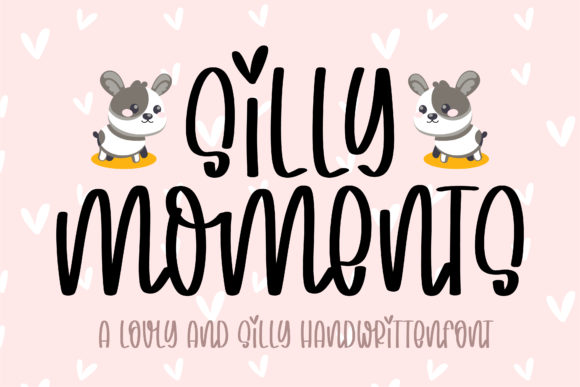
There is a specific kind of warmth that digital design often misses. We spend so much time aligning grids, snapping objects to pixels, and ensuring vectors are mathematically perfect that we sometimes strip the humanity right out of the work. When you look at Silly Moments, you aren't looking at a mathematically perfect typeface. You are looking at something that feels like it was actually written by a person. It is a sweet, friendly handwritten font that captures the essence of natural penmanship, complete with the slight variations in baseline and stroke width that make handwriting so personal. In a landscape dominated by rigid sans serifs and corporate serifs, this font offers a breath of fresh air, acting as a reminder that design is, at its core, a form of communication between humans.
The visual character of Silly Moments is defined by its approachability. It doesn’t have the jagged, aggressive edges of a grunge font, nor does it possess the rigid uniformity of a technical script. Instead, it strikes a balance. The letterforms are distinct enough to maintain legibility but loose enough to feel organic. It has a distinct "bouncy" quality to its rhythm—the way the letters connect and flow suggests movement and energy. This makes it an incredibly versatile tool. It isn't just a "girly" script or a "kids" font; it is a universal communicator of friendliness. Whether you are a crafter working on a scrapbook or a startup founder designing a landing page, the font carries a personality that says, "We are approachable, and we are here to help."
The Psychology of Friendly Typography
As designers and marketers, we often underestimate the psychological weight of our typeface choices. Typography is silent body language. If you use a heavy, condensed gothic font, you are signaling urgency and seriousness. If you use a sterile, geometric sans serif, you are signaling modernity and efficiency. When you choose a handwritten font like Silly Moments, you are signaling vulnerability and authenticity.
For entrepreneurs and small business owners, this is vital. If you are selling homemade goods, consulting services, or lifestyle products, your customers want to connect with you, not a faceless corporation. Using Silly Moments in your logo design or brand identity immediately lowers the barrier to entry. It tells the viewer that your brand doesn't take itself too seriously, which can be a massive relief in a high-stress world. It humanizes the digital experience. When a user visits a website and sees a header written in a natural, handwritten style, it mimics the feeling of receiving a note from a friend. This subtle shift in perception can significantly increase audience engagement and dwell time.
Practical Applications: From Screen to Print
One of the strengths of a good premium font is its adaptability across different media. Because Silly Moments relies on a natural style rather than complex, high-contrast strokes, it translates surprisingly well from digital to print. However, knowing where to use it is just as important as having it in your toolkit.
Digital Design and Web Use
In the realm of web design and social media graphics, Silly Moments shines brightest when used sparingly. It is a display font, meaning it is designed to be seen at larger sizes. I would strongly advise against using it for long paragraphs of body copy; the readability of any script font drops significantly when you shrink it down to 12 pixels and ask a user to read a whole blog post.
Instead, use it for impact. It works beautifully for pull quotes, hero section headlines, or call-to-action buttons where you want to draw the eye without shouting. On social media, it is perfect for Instagram stories or Pinterest pins where the goal is to stop the scroll. The unique style of Silly Moments cuts through the noise of standard sans serifs that every other influencer is using.
Editorial and Packaging Design
For publishers and content creators, this font offers a fantastic way to break up the monotony of editorial design. Imagine a magazine layout or a blog post header using a sturdy serif font for the main title, but using Silly Moments for the sub-headers or bylines. It adds a layer of visual hierarchy that guides the reader's eye and adds personality to the page.
In packaging design, specifically for artisanal goods, cosmetics, or food products, the font adds a "homemade" quality. It suggests that care was taken in the creation of the product. It pairs exceptionally well with kraft paper textures and soft color palettes, reinforcing the idea that the product inside is crafted with love.
Mastering the Pairing and Hierarchy
A common mistake I see with creative fonts is that designers try to let them do all the heavy lifting. Silly Moments is a star player, but it needs a supporting cast. Because it is a handwritten font with a lot of personality, it requires a neutral partner to anchor it.
The best strategy here is contrast. You want to pair the fluid, organic nature of Silly Moments with something structured.
- With Sans Serifs: Pairing it with a clean, geometric sans serif creates a modern, fresh look. The sans serif handles the serious data and the small text, while Silly Moments provides the emotional hook in the headers.
- With Serifs: If you are going for a more vintage or editorial vibe, pair it with a classic serif typeface. The contrast between the rigid serifs and the loose handwriting creates a sophisticated yet approachable aesthetic.
Avoid pairing it with other script fonts or overly decorative display fonts. That creates visual chaos. The goal is to let the unique style of Silly Moments breathe.
Technical Considerations and Licensing
When integrating any commercial font into your workflow, you have to look past the aesthetics and check the utility. Silly Moments is designed to be user-friendly, but there are a few practical checks you should always perform.
First, always test your specific use case for readability. Type out the specific words you plan to use. Sometimes, the connection between two specific letters in a handwritten font can look awkward (like a double 'o' or a 't' followed by an 'h'). A high-quality font usually accounts for this, but it’s your job as the designer to review it. Check if the font includes stylistic alternates or ligatures—these are variations of letters that can be swapped out to make the text look even more natural and less repetitive.
Second, understand the licensing. If you are a freelancer creating a logo for a client using Silly Moments, you need to ensure the license covers commercial use and, specifically, how many "seats" or users will have access to the font file. If you are using it for social media graphics, a standard desktop license usually suffices. However, if you are embedding the font directly into an app or a website using @font-face, you often need a specific webfont license. Always read the End User License Agreement (EULA). Respecting the creator's work ensures that designers can continue to produce high-quality assets like this one.
Unleashing Your Imagination
The description of Silly Moments suggests that the only limit is your imagination, and in my experience, that is true. I have seen similar styles used for wedding invitations, but I have also seen them used for edgy skate shop branding. It all depends on context. If you use it with neon colors and dark backgrounds, it feels energetic and youthful. If you use it with pastel watercolors, it feels gentle and nostalgic.
Don't be afraid to experiment with the color of the text, either. Handwritten fonts often look better in colors other than pure black, which can be too harsh against the soft edges of the letters. Try a dark charcoal grey or a deep navy blue to maintain professionalism while keeping the friendly vibe.
Ultimately, Silly Moments is more than just a font file; it is a tool for connection. In a world of automated chatbots and AI-generated content, adding a touch of genuine, human imperfection to your brand identity is a powerful strategy. It invites your audience in, makes them feel comfortable, and reminds them that there is a real person behind the screen. Whether you are designing a business card or a full website, this typeface gives you the permission to be a little less serious and a lot more human.