Why Pirate Doodle is the Playful Dingbat Font Your Projects Need
A Dingbat Font with a Distinct Personality
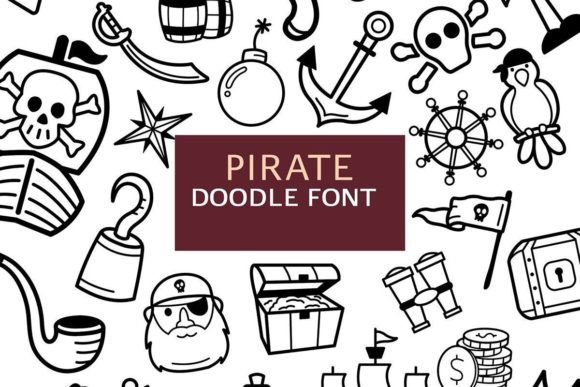
Let's be honest, finding the right design asset can sometimes feel like a chore. You're scrolling through endless lists of serif fonts and sans serif fonts, looking for that one element that brings a project to life. Then you stumble upon something like Pirate Doodle. It’s not your typical typeface. Pirate Doodle is a fun and cute dingbat font, which means it’s a collection of illustrations and symbols mapped to keyboard keys. Think of it as a curated set of icons, but with a cohesive, hand-drawn charm that’s hard to replicate. The visual style is distinctly whimsical, featuring a cast of friendly pirates, treasure chests, ships, and nautical paraphernalia, all rendered with a playful, sketch-like quality.
The overall appeal of this creative font lies in its personality. It doesn't take itself too seriously. This makes it an instant mood-lifter for any design. Unlike a standard script font or a blocky display font, Pirate Doodle provides visual storytelling. Each glyph is a tiny piece of art that can instantly set a tone of adventure, fun, and nostalgia. For a designer or content creator, it’s a shortcut to injecting character into a project without needing to commission custom illustrations. It’s a ready-made toolkit for anyone looking to add a touch of playful charm to their work, making it a valuable addition to your collection of design assets.
Where This Font Truly Shines
The versatility of Pirate Doodle is where its real value lies. It’s a premium font that feels accessible. Its strength is in application, and its uses span a surprisingly wide range. For crafters and hobbyists, this is a dream. Imagine creating custom stickers for a planner or diary. A simple keypress can generate a detailed pirate ship to mark a vacation or a treasure chest to highlight a special event. For activity books, it’s perfect for creating "find the object" games, mazes, or coloring page elements. The illustrations are clear, engaging, and perfectly suited for these personal projects.
Beyond personal use, its applications in commercial projects are just as compelling. Think about packaging design for a children's product, a party supply company, or a small-batch brand with a quirky, adventurous identity. Using Pirate Doodle for icons on packaging or in a brand's logo design elements can create an immediate and memorable connection with the audience. It’s an excellent choice for social media graphics, especially for brands aiming for a playful, approachable vibe. A series of Instagram stories or a Facebook post promoting a sale can be elevated with thematic icons that grab attention and reinforce the message. It’s a fantastic tool for brand identity when the brand’s voice is fun and lighthearted.
In editorial design and web design, Pirate Doodle can serve as charming visual breaks. A travel blogger could use it to create custom dividers or bullet points. A children's book publisher could use it for chapter headings or page footers. Its effectiveness comes from its ability to be both decorative and functional. It guides the reader's eye and adds a layer of delight to the reading experience, which is a core principle of good modern typography.
Integrating Pirate Doodle into Your Creative Workflow
Adopting a new typeface into your workflow requires a bit of strategy. With a font like Pirate Doodle, the first step is always to evaluate the project's fit. Ask yourself: does the project's tone align with a playful, illustrative style? If you're designing a corporate law firm's annual report, this isn't the font for you. But if you're creating a birthday invitation, a summer camp brochure, or branding for a bakery, it could be the perfect choice. The key is to match the font's personality to the project's goals and audience.
Next, consider font pairing. A dingbat font like Pirate Doodle is rarely used alone. It’s meant to be paired with a primary text font. Because Pirate Doodle is so visually busy, it pairs best with a clean, simple font. A classic sans serif font like Lato, Montserrat, or even a simple serif font like Merriweather can provide a beautiful contrast. The clean lines of the body text allow the playful dingbats to stand out without overwhelming the design. Avoid pairing it with another ornate display font or a complex handwritten font, as this will create visual chaos and harm readability.
When you get the font, take some time to explore all the included styles. Many premium dingbat fonts come with variations. You might find different weights, outline versions, or complementary elements that give you even more creative control. Test the illustrations at different sizes to see how they hold up. A small icon for a website footer might need to be simpler than a large, standalone graphic for a poster. This kind of testing is crucial for maintaining a professional and polished look. Pay close attention to how the characters render in your specific design software, whether it's for digital or print.
Finally, if you plan to use Pirate Doodle for any commercial project—be it for a client, your own business, or products for sale—you must review the licensing. Most commercial fonts come with specific licensing terms that dictate how they can be used. Ensure the license covers your intended use, whether it's for digital products, printed merchandise, or client work. Respecting font licensing is a hallmark of a professional designer or entrepreneur and protects you from potential legal issues down the line. It’s a small but vital step in using any design asset responsibly.
Ultimately, Pirate Doodle is more than just a collection of pirate-themed drawings. It's a tool for injecting joy and personality into your work. Its real-world value comes from its ability to help you tell a better visual story, connect with your audience on an emotional level, and make your designs more memorable. When used thoughtfully, it can be the secret ingredient that transforms a good project into a great one.